

Every founder has heard some version of the same advice: go big, move fast, get distribution. It sounds right. It makes for a compelling fundraising narrative. And in CPG, it is often the fastest path to running out of money.
Chasing national scale before you build local dominance is how brands run out of runway
Small Pond, Big Strategy: Why Gated Markets Win in CPG
Getting pushed into the forefront too quickly, with no underlying base, is very hard to sustain.
You see it in the DTC companies that exploded on social media and then vanished the moment the ad spend stopped. The brands that achieve fast, national scale without the operational foundation to support it are not winning. They are borrowing time.
The Kelly Clarkson Problem
Think about American Idol winners. They get pushed to the top overnight, in front of a massive audience, before any real foundation is under them. Most cannot sustain it. The rare ones who last, like Kelly Clarkson, are genuinely talented and also caught some luck. What almost none of them had was a base built before the spotlight arrived.
That is the trap. When a brand gets pushed to the front before the foundation is in place, talent alone cannot carry the weight, and in CPG the thin margins expose that fast.
If you bust out the gates as a big fish in a big pond, you actually don't have any of those operational efficiencies or excellence behind you. So you often are just burning cash in order to stay afloat. — Kiki Couchman, Co-Founder, Sourmilk
What a Gated Market Actually Gives You
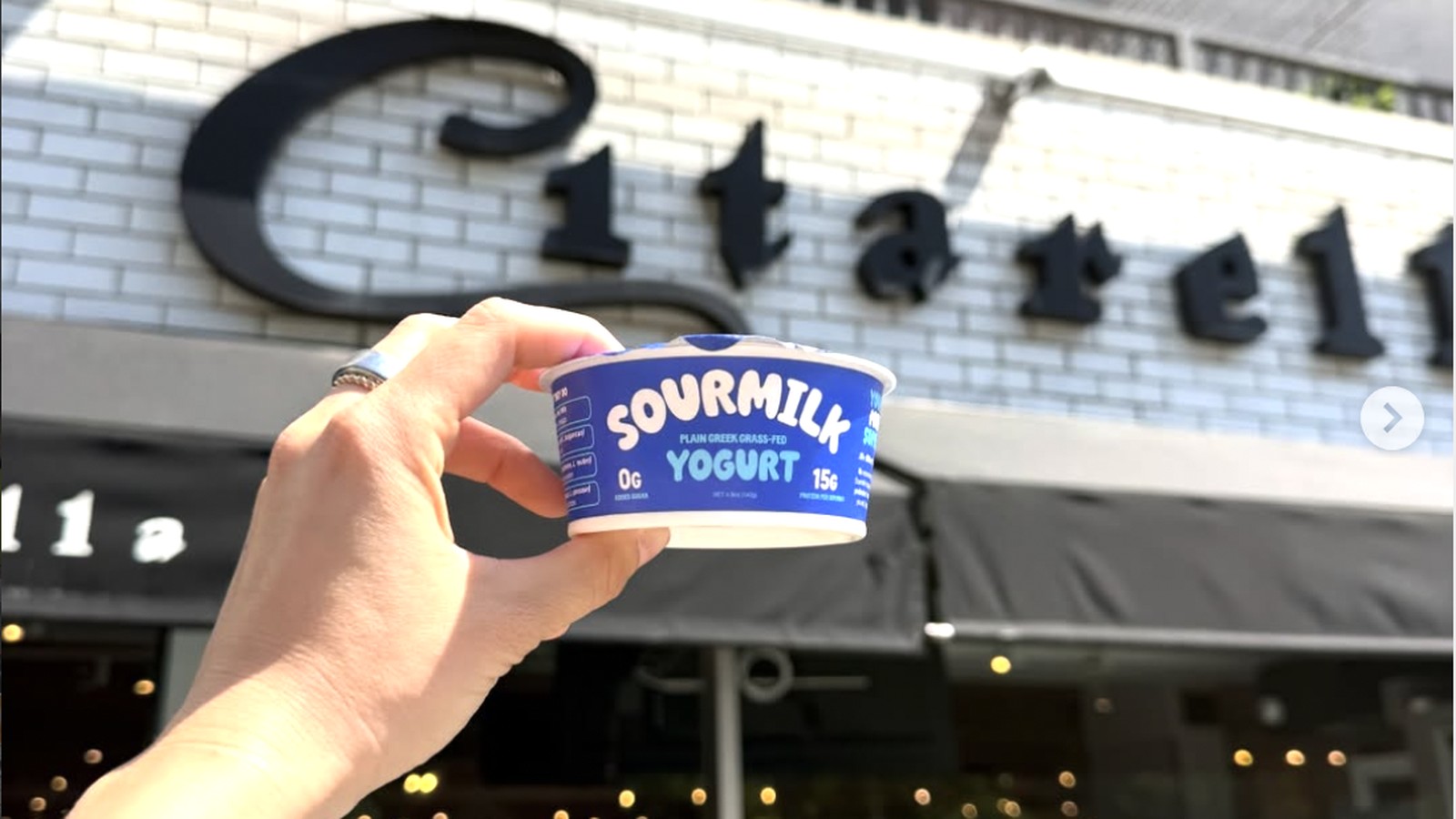
Choosing to dominate a specific, bounded market first is not a concession. It is a deliberate choice to build what national expansion actually requires. For Sourmilk, that market was New York because it is one gated geography where the brand could focus, dominate, and build the proof of concept that retailers need before they take a risk on a new product.
Grocery retail is real estate. A product selling five units a week is costing the retailer money compared to the incumbent brand selling twenty in the same shelf space. Before a new brand can ask for that shelf space and keep it, it needs to prove it can move product. The only way to prove that without national reach is to go deep in a smaller market first and build the velocity data that makes the pitch credible.
The constraints of operating in one city force operational discipline that brands that scale too fast never develop. Eight-week shelf life, refrigerated product, slim margins: each of these constraints becomes easier to manage at a bounded scale. Get the systems right in one market and the expansion into the next one is a build on a working foundation, not a bet on one that has never been tested.
The Operational Case for Starting Small
The businesses that do not survive rapid expansion are usually not failing because the product is bad. They are failing because the operational engine was never built. In CPG, the business is essentially this: create a good product for less than it will sell for, and do it at a scale where the margin actually means something.
Without economies of scale and without operational excellence, that equation does not work. And operational excellence is not something that gets layered on after the fact. It gets built in the early, bounded stages where mistakes are survivable and course corrections are cheap.
The brands winning in CPG long-term are not the ones who grew the fastest. They are the ones who built the most efficient machine before they scaled it.
How to Think About Expanding from a Position of Strength
Once the foundation is there, the gated market playbook becomes the credential for every conversation that follows. Velocity data from a smaller market is proof. A cult following in one city is proof. A retail relationship built on actual performance is proof.
Expansion built on proof is a different conversation than expansion built on a pitch. One has leverage. The other needs favorable terms just to survive.
The brands that treat the small pond as a limitation are missing what it is actually building: the operational muscle, the customer data, and the retail track record to walk into a national conversation with real numbers behind them.
Listen to the episode
Small Pond, Big Strategy: Why Gated Markets Win in CPG
Hear the full conversation on Apple Podcasts, Spotify, or YouTube.

Join the conversation
Share your thoughts on this episode. Be respectful and on‑topic.